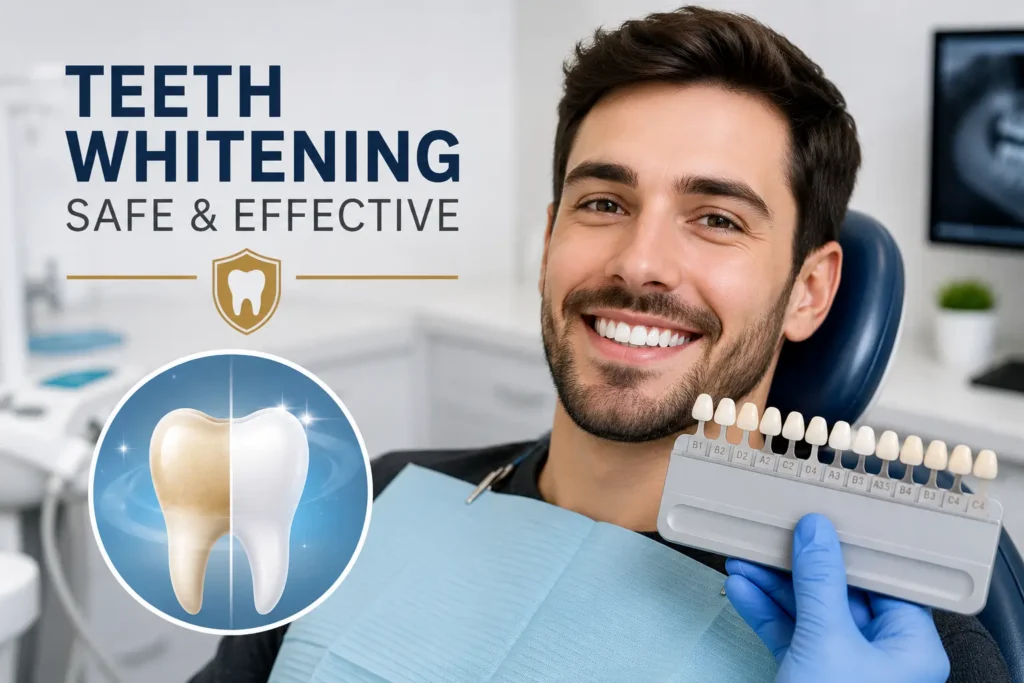
Is Teeth Whitening Safe?
A bright, white smile can boost your confidence and leave a lasting impression. It’s no surprise that teeth whitening has become one of the most popular cosmetic dental treatments in the UK. From professional whitening at a dental practice to at-home whitening kits, there are now more options than ever before. However, many people still have one important question before starting treatment: Is teeth whitening safe?
The short answer is yes, but only when it’s carried out correctly and under professional guidance. Safe teeth whitening can effectively remove stains and brighten your smile without damaging your teeth or gums. On the other hand, using unapproved products or whitening without proper advice may lead to unwanted side effects. If you’re thinking about improving your smile, this guide explains everything you need to know about the safety of teeth whitening, how the treatment works, possible side effects, who should avoid whitening, and how to achieve the best results safely.
What Is Teeth Whitening?
Teeth whitening is a cosmetic dental treatment that lightens the natural colour of your teeth by reducing stains and discolouration. Unlike a scale and polish, which removes plaque and surface stains, whitening works by breaking down stain molecules inside the enamel using specially formulated whitening gels. Professional whitening treatments are carefully planned to brighten your smile while protecting your teeth and gums.
Many people choose teeth whitening to improve stains caused by:
- Tea and coffee
- Red wine
- Smoking
- Certain foods
- Natural ageing
- Some medications
The goal isn’t to create an unnaturally white smile but to restore a brighter, healthier-looking appearance.
Is Teeth Whitening Safe?
Yes, teeth whitening is safe when performed by a qualified dental professional or when using dentist-approved whitening products. Professional whitening treatments are designed to brighten your teeth while protecting your enamel and surrounding gum tissue. Before treatment begins, your dentist checks your oral health to make sure whitening is suitable for you. If there are any issues such as untreated cavities, gum disease, or cracked teeth, these are usually treated first to reduce the risk of sensitivity or discomfort. Problems generally occur when people use products purchased from unreliable online sellers or attempt DIY whitening methods that haven’t been clinically tested.
How Does Teeth Whitening Work?
Professional whitening gels contain active ingredients that gently break down stain molecules inside the tooth structure. Once applied, the whitening gel penetrates the enamel and helps lift years of staining without removing healthy tooth structure.
Your dentist carefully controls:
- The strength of the whitening gel
- The treatment time
- The condition of your teeth
- Protection for your gums
This controlled approach makes professional whitening much safer than many over-the-counter alternatives.
Is Professional Teeth Whitening Safer Than DIY Products?
In most cases, yes. Professional whitening begins with a full dental examination. Your dentist checks that your teeth and gums are healthy before recommending treatment. DIY whitening products often promise quick results, but they may not be suitable for everyone. Some products contain ingredients that are either too weak to produce noticeable improvements or are sold without proper regulation.
Professional whitening offers several advantages:
- Personalised treatment plans
- Safe whitening gel concentrations
- Custom-made whitening trays where appropriate
- Professional monitoring
- Reduced risk of gum irritation
- More even whitening results
Can Teeth Whitening Damage Enamel?
This is one of the most common myths. When performed correctly, professional teeth whitening does not damage healthy tooth enamel. The whitening process changes the colour of stains inside the tooth but does not remove enamel or weaken the tooth structure. Problems usually occur when whitening products are overused or when people use products that haven’t been approved by dental professionals. Following your dentist’s instructions is the best way to protect your teeth while achieving excellent results.
Does Teeth Whitening Cause Sensitivity?
Some people experience temporary tooth sensitivity after whitening. This is usually mild and disappears within a few days.
You may notice:
- Mild sensitivity to cold drinks
- Slight discomfort when eating cold foods
- Temporary sensitivity while brushing
These effects are generally short-lived and often improve naturally. If you already have sensitive teeth, your dentist can recommend products or treatment plans designed to minimise discomfort.
Is Teeth Whitening Safe for Everyone?
Although teeth whitening is safe for many adults, it isn’t suitable for every patient. Your dentist may advise delaying treatment if you have:
- Active tooth decay
- Gum disease
- Cracked teeth
- Worn enamel
- Untreated dental infections
- Severe tooth sensitivity
Whitening may also not be recommended during pregnancy or breastfeeding, depending on your dentist’s advice. Children under 18 are generally not suitable candidates for cosmetic teeth whitening.
How Long Do Teeth Whitening Results Last?
The results vary from person to person. Many patients enjoy a brighter smile for several months or even a few years. The longevity of your results depends on:
- Oral hygiene habits
- Smoking
- Tea and coffee consumption
- Red wine
- Diet
- Regular dental hygiene appointments
Good oral care helps maintain your results for longer.
How Can You Keep Your Teeth White?
Maintaining your results is often easier than people think. Simple habits include:
- Brush twice daily
- Floss every day
- Visit your dentist regularly
- Attend hygiene appointments
- Reduce smoking
- Limit staining drinks
- Drink water after tea or coffee
- Use a straw for coloured drinks where appropriate
These small habits can help your smile stay brighter between whitening treatments.
Are Online Teeth Whitening Kits Safe?
Not always. Some online products make unrealistic promises and may not meet UK safety standards. Without a dental examination, it’s impossible to know whether whitening is appropriate for your teeth.
Some poorly regulated products may:
- Cause gum irritation
- Increase sensitivity
- Produce uneven whitening
- Deliver disappointing results
If you’re unsure about a product, it’s always worth asking your dentist before using it.
Common Myths About Teeth Whitening
Myth 1: Teeth Whitening Damages Teeth
False. Professional whitening does not damage healthy enamel when carried out correctly.
Myth 2: Whitening Results Last Forever
False. Lifestyle habits gradually cause new staining over time, so occasional top-up treatments may be recommended.
Myth 3: Whitening Works on Crowns and Fillings
False. Whitening treatments only work on natural teeth. Existing crowns, veneers, bridges, and composite fillings do not change colour.
Myth 4: Everyone Gets the Same Results
False. Every smile is different. Your starting tooth colour, age, lifestyle, and type of staining all influence the outcome.
When Should You Speak to a Dentist?
It’s worth arranging a consultation if you:
- Want a brighter smile
- Have stains that brushing won’t remove
- Feel embarrassed by tooth discolouration
- Have sensitive teeth
- Are unsure which whitening option is right for you
Your dentist can recommend the safest treatment based on your oral health and smile goals.
Benefits of Professional Teeth Whitening
Many patients choose professional whitening because it offers:
- Safe treatment under professional supervision
- Noticeably brighter teeth
- Natural-looking results
- Personalised treatment plans
- Even whitening
- Improved confidence
- Long-lasting results with proper care
- Minimal downtime
Final Thoughts
So, is teeth whitening safe? For most people, the answer is yes, provided the treatment is carried out correctly and under the guidance of a qualified dental professional. Professional teeth whitening is designed to brighten your smile while protecting your teeth and gums. Before treatment, your dentist will assess your oral health, explain the available options, and recommend the most suitable approach for your needs. If you’re considering teeth whitening in Wandsworth, booking a consultation is the safest way to begin. With professional advice, realistic expectations, and good aftercare, you can enjoy a brighter, healthier-looking smile with confidence.