Signs You Need a Root Canal: Don’t Ignore These Warning Symptoms
A sudden toothache can be frustrating, but not every dental problem requires a root canal. Sometimes the pain goes away after a day or two, while other times it becomes more intense and starts affecting your daily life. The challenge is knowing when the pain is simply temporary and when it’s a sign that something more serious is happening inside your tooth. Many people become anxious when they hear the words “root canal treatment.“ They often imagine a painful procedure or believe it means losing their tooth. In reality, modern root canal treatment is designed to relieve pain, remove infection, and help save your natural tooth whenever possible.
The problem is that many people ignore the early warning signs. They hope the pain will disappear on its own or rely on painkillers for temporary relief. Unfortunately, an untreated tooth infection usually doesn’t heal by itself. Delaying treatment can allow the infection to spread, making the problem more serious and potentially leading to tooth loss.
If you’ve been wondering whether your tooth needs professional attention, this guide explains the most common signs you may need a root canal, what causes these symptoms, how the treatment works, and when it’s time to see a dentist. Many patients ask, “How do you know if you need a root canal before deciding whether to visit a dentist?” Understanding the signs you need a root canal can help you get treatment before the infection becomes more serious.
What Is a Root Canal?
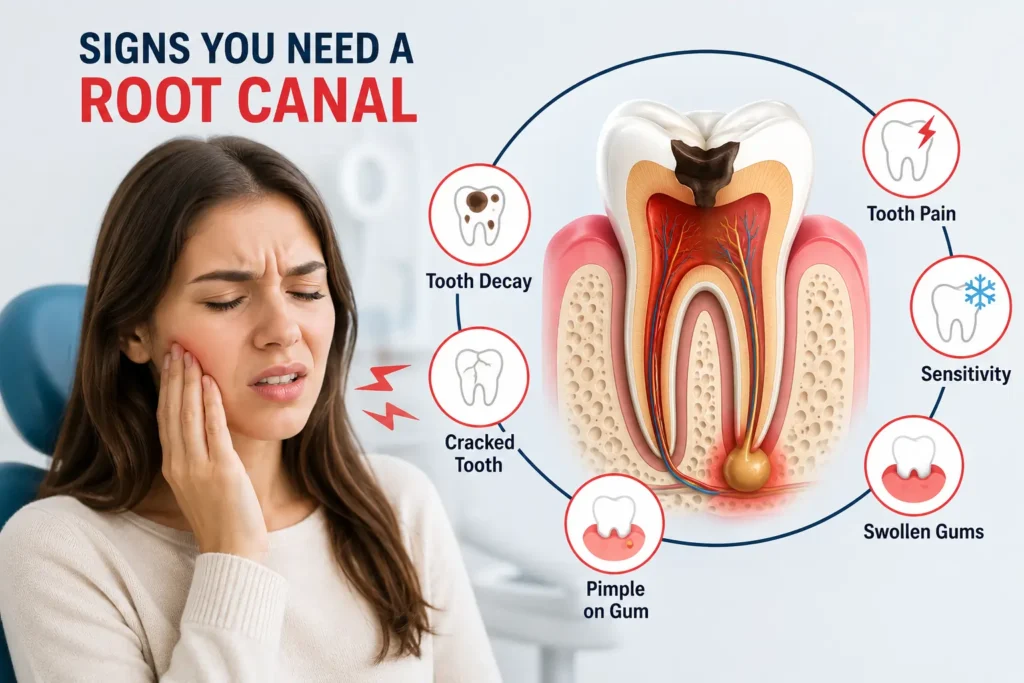
A root canal is a dental treatment used to save a tooth when the soft tissue inside it, known as the dental pulp, becomes infected or badly damaged. Inside every tooth are tiny canals that contain nerves, blood vessels, and connective tissue. When bacteria enter these canals through deep decay, cracks, trauma, or repeated dental work, the pulp can become inflamed or infected.
During root canal treatment, the infected tissue is carefully removed, the canals are cleaned and disinfected, and the tooth is sealed to prevent future infection. In many cases, a dental crown is then placed over the tooth to restore its strength and appearance. The aim of the treatment is simple: eliminate the infection while preserving your natural tooth. Knowing the signs you need a root canal makes it easier to seek treatment before the infection spreads.
Why Might You Need a Root Canal?
Several dental problems can lead to infection inside a tooth, including:
- Deep tooth decay
- Untreated cavities
- Cracked or chipped teeth
- Repeated dental procedures on the same tooth
- Trauma from an accident or sports injury
- Severe wear caused by grinding your teeth
Not every damaged tooth requires a root canal, but understanding the signs you need a root canal helps you seek treatment before the infection becomes more serious. Recognising the signs you need a root canal early can help protect your natural tooth and avoid further complications.
Common Signs You Need a Root Canal
Every patient is different, but certain symptoms often indicate that the inner part of the tooth has become infected. These are the most common symptoms of needing a root canal that dentists frequently diagnose. These signs you need a root canal should never be ignored because early treatment often prevents more serious dental problems.
1. Persistent Tooth Pain
One of the most common warning signs is ongoing tooth pain. The pain may:
- Come and go
- Wake you up at night
- Become worse while chewing
- Spread towards your jaw or ear
- Continue for several days
Pain that doesn’t improve should never be ignored. Persistent pain is one of the most obvious signs you need a root canal and should never be ignored.
2. Sensitivity That Doesn’t Go Away
It’s normal to experience brief sensitivity after eating something hot or cold. However, if the discomfort lasts for several minutes after the temperature changes, it may indicate damage to the tooth’s nerve. Lingering sensitivity is one of the early signs that professional assessment is needed.
3. Pain When Biting or Chewing
If biting into food causes sharp pain or pressure, the infection may have reached the tissues surrounding the tooth root. Many patients notice they start chewing on only one side of their mouth because of the discomfort.
4. Swollen Gums
Swelling around one particular tooth can be another sign of infection. You may notice:
- Tender gums
- Redness
- Swelling
- A small lump near the tooth
The swelling may appear and disappear, but the underlying infection usually persists. Swollen gums are among the common signs you need a root canal, especially when the swelling keeps returning.
5. A Small Pimple on the Gum
Sometimes a dental abscess creates a small bump on the gum. This bump may release pus or fluid, leaving an unpleasant taste in your mouth. Even if the discomfort improves after the fluid drains, the infection still requires treatment.
6. Tooth Discolouration
An infected tooth may gradually become darker than the surrounding teeth. Grey, brown, or dark yellow discolouration can occur when the nerve inside the tooth dies. Although not every discoloured tooth requires a root canal, it’s an important symptom that shouldn’t be ignored.
7. A Chipped or Cracked Tooth
A crack may seem minor, but it can allow bacteria to enter the inner part of the tooth. Sometimes the damage isn’t visible, which is why a dental examination is essential if you’ve suffered any injury.
8. Loose Tooth
As the infection spreads, it can affect the surrounding bone and supporting tissues. This may cause the tooth to feel slightly loose or uncomfortable when touched.
Can a Tooth Need a Root Canal Without Pain?
Many patients ask, can you need a root canal without pain? It is only necessary if they’re experiencing severe pain. In reality, some infected teeth cause very little discomfort. You may only notice:
- Tooth discolouration
- Mild swelling
- A recurring gum pimple
- Slight tenderness
Regular dental check-ups often detect these problems before they become painful.
What Happens If You Ignore the Symptoms?
Many people wonder what happens if you don’t get a root canal after an infection develops. Without treatment, the infection may:
- Spread deeper into the tooth
- Damage surrounding bone
- Cause a dental abscess
- Lead to facial swelling
- Increase the risk of tooth loss
Early treatment is usually simpler, more comfortable, and more successful than waiting until the infection becomes severe.
How Is a Root Canal Performed?
Many people are surprised to learn that modern root canal treatment is similar in comfort to having a routine filling. The process usually involves:
Examination
Your dentist examines the tooth and takes X-rays to assess the infection.
Local Anaesthetic
The area is numbed to keep you comfortable throughout the procedure.
Cleaning the Tooth
The infected pulp is carefully removed, and the canals are cleaned and disinfected.
Filling the Canals
The cleaned canals are sealed with a special material to prevent bacteria from returning.
Restoring the Tooth
In many cases, a crown is recommended to protect the tooth and restore its strength.
Does a Root Canal Hurt?
This is one of the biggest concerns patients have. The truth is that root canal treatment is intended to relieve pain, not cause it. Thanks to modern anaesthetics and advanced dental techniques, most patients report that the procedure feels no more uncomfortable than having a filling. After treatment, mild tenderness is normal for a few days, but it usually settles quickly.
How Can You Prevent Needing a Root Canal?
Although not every root canal can be avoided, good oral care greatly reduces the risk.
Simple habits include:
- Brush twice daily with fluoride toothpaste
- Floss every day
- Attend regular dental check-ups
- Visit your dental hygienist
- Treat cavities early
- Wear a mouthguard during sports if needed
- Avoid chewing hard objects like ice or pens
Preventive care is always easier than treating an advanced infection.
When Should You See a Dentist?
Knowing the signs you need a root canal can help you seek treatment before the infection worsens. You should arrange a dental appointment if you experience:
- Persistent tooth pain
- Swollen gums
- Pain while chewing
- Lingering hot or cold sensitivity
- Tooth discolouration
- A cracked tooth
- A pimple on the gum
- Facial swelling
The earlier the problem is diagnosed, the better the chances of saving your natural tooth. If you notice several signs you need a root canal, book a dental appointment as soon as possible.
Common Myths About Root Canal Treatment
Myth 1: Root Canals Are Extremely Painful
Modern root canal treatment is designed to remove pain caused by infection, not create it.
Myth 2: It’s Better to Remove the Tooth
Saving your natural tooth is usually the preferred option whenever possible.
Myth 3: Antibiotics Can Replace a Root Canal
Antibiotics may help control some symptoms temporarily, but they cannot remove infected tissue from inside the tooth.
Myth 4: The Pain Will Eventually Go Away
Pain may reduce if the nerve dies, but the infection usually remains and can continue spreading.
Final Thoughts
Recognising the signs you need a root canal can make a significant difference to your oral health. Persistent tooth pain, prolonged sensitivity, swollen gums, tooth discolouration, or discomfort when chewing should never be ignored. These symptoms often indicate that the inside of the tooth has become infected and needs professional attention.
The good news is that modern root canal treatment is a safe and effective way to remove infection while preserving your natural tooth. Seeking treatment early can help prevent unnecessary complications and reduce the likelihood of more extensive dental procedures in the future. If you’re experiencing any of these symptoms or are concerned about a painful tooth, booking a dental examination is the best next step.
An early diagnosis gives your dentist the best opportunity to relieve your discomfort, protect your oral health, and save your natural smile. If you recognise the signs you need a root canal, early treatment gives you the best chance of saving your natural tooth.