What Is Considered Emergency Dental Care? A Complete Guide to Recognising Urgent Dental Problems
Dental pain has a habit of appearing at the worst possible time. It might start as a dull ache during dinner, a chipped tooth after a weekend football match, or sudden swelling that wakes you in the middle of the night. In moments like these, it’s natural to wonder whether you should wait for a routine appointment or seek emergency dental care straight away. The truth is that not every dental problem is an emergency. Some issues can safely wait a day or two, while others require immediate professional attention to relieve pain, stop an infection from spreading, or even save a tooth. Knowing the difference can help you make the right decision and avoid unnecessary complications.
Many people delay treatment because they hope the discomfort will disappear on its own. Unfortunately, serious dental problems rarely improve without professional care. What starts as a minor issue can quickly become a more complex and expensive problem if left untreated. This guide explains what is considered a dental emergency, the warning signs you should never ignore, what you can do before seeing a dentist, and when it’s safe to wait for a routine appointment. Understanding emergency dental care helps you know when fast treatment is needed and when a routine dental appointment is enough. Many people search for emergency dental care near me when they experience sudden pain or swelling.
Can You Get an NHS Emergency Dental Appointment?
If you’re eligible, an NHS emergency dental appointment may be available for urgent dental problems such as severe pain, swelling, bleeding, or a knocked-out tooth. Contact your dental practice or NHS services to check availability.
What Is a Emergency Dental Care?
A dental emergency is any oral health problem that requires prompt. Emergency dental care is designed to treat urgent dental problems that cannot safely wait for a routine appointment. professional treatment to:
- Relieve severe pain
- Stop excessive bleeding
- Prevent infection from spreading
- Save a damaged or knocked-out tooth
- Protect your overall health
Some dental emergencies are obvious, while others develop gradually. Even if you’re unsure whether your situation is urgent, it’s always better to contact your dental practice for advice rather than guessing.
How do I book an emergency dental appointment near me?
If you need an emergency dental appointment near me, contact your nearest dental practice as early as possible. Most clinics reserve same-day appointments for urgent dental problems.
Signs You May Have a Dental Emergency
Certain symptoms should never be ignored because they often indicate a problem that needs immediate attention.
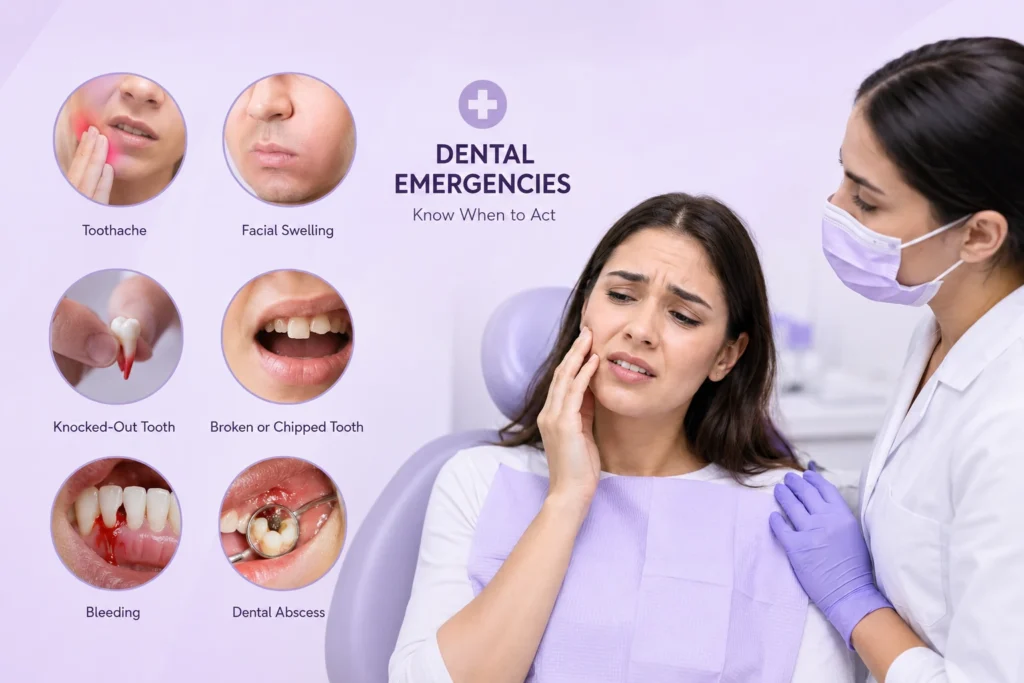
1. Severe Toothache That Doesn’t Go Away
A mild toothache can sometimes be caused by temporary sensitivity. However, severe or persistent pain often suggests a deeper problem such as:
- Advanced tooth decay
- An infected dental nerve
- A dental abscess
- A cracked tooth
If the pain continues for several hours, worsens over time, or prevents you from sleeping, you should arrange an emergency dental appointment.
2. Facial Swelling
In many cases, facial swelling requires emergency dental care because it may indicate a serious infection. Swelling around your jaw, cheek, or gums can be a sign of a serious dental infection.
You may notice:
- Puffy gums
- Swelling around one side of the face
- Pain while opening your mouth
- Difficulty chewing
Facial swelling should never be ignored, especially if it continues to increase.
3. Knocked-Out Tooth
A tooth that has been completely knocked out requires immediate attention. Quick action can sometimes save the tooth.
If this happens:
- Pick the tooth up by the crown, not the root.
- Gently rinse it with clean water if it’s dirty.
- Avoid scrubbing or removing attached tissue.
- If possible, place it back into the socket.
- If that isn’t possible, keep it in milk or inside your cheek (if safe to do so).
- Contact an emergency dentist immediately.
The sooner treatment begins, the better the chance of saving the tooth.
4. Broken or Chipped Tooth
Not every chipped tooth is an emergency. However, urgent treatment may be needed if:
- A large part of the tooth has broken
- The tooth is causing severe pain
- Sharp edges are cutting your tongue or cheek
- The nerve is exposed
Small cosmetic chips without pain can usually wait for a routine appointment.
5. Uncontrolled Bleeding
Bleeding after brushing your teeth is not usually considered a dental emergency. However, immediate treatment is recommended if:
- Bleeding continues after an accident
- The bleeding doesn’t stop after applying pressure
- A tooth has been knocked out
- There is significant bleeding following dental trauma
6. Dental Abscess
A dental abscess should always be assessed through emergency dental care to stop the infection from spreading. A dental abscess is a pocket of infection that forms around a tooth or gum. Common symptoms include:
- Severe throbbing pain
- Swollen gums
- Pus around the tooth
- Bad taste in the mouth
- Fever
- Swollen glands
An abscess should always be treated promptly because the infection can spread to nearby tissues if left untreated.
7. Lost Filling or Crown
A lost filling or crown isn’t always an emergency. However, you should contact your dentist quickly if:
- The tooth is painful
- Sharp edges are causing discomfort
- The exposed tooth is sensitive
- The crown cannot be replaced safely
Temporary dental cement from a pharmacy may help protect the tooth until your appointment, but it should not replace professional treatment.
8. Injury to the Mouth
Accidents involving the mouth can damage teeth, gums, lips, or the jaw. You should seek urgent care if:
- A tooth has been displaced
- You suspect a broken jaw
- There is heavy bleeding
- Teeth have become loose
- You cannot close your mouth normally
Dental Problems That Can Usually Wait
Not every dental issue needs same-day treatment. These problems can often wait for a routine appointment if you’re comfortable:
- Mild tooth sensitivity
- Small chips with no pain
- Lost fillings without discomfort
- Minor tooth staining
- Broken dentures that aren’t causing injury
- Food trapped between teeth
Although they aren’t emergencies, they should still be checked by your dentist.
What Should You Do Before Seeing an Emergency Dentist?
If you experience a dental emergency, staying calm can make a big difference. While waiting for your appointment:
- Rinse your mouth gently with warm salt water if appropriate.
- Apply a cold compress to reduce swelling.
- Avoid chewing on the affected side.
- Keep broken tooth fragments if possible.
- Take pain relief as directed, unless advised otherwise by a healthcare professional.
- Avoid placing aspirin directly onto the gums.
These steps may help reduce discomfort but won’t treat the underlying problem. Seeking emergency dental care as soon as possible improves the chances of protecting your natural teeth.
When Should You Go to A&E Instead of a Dentist?
Some situations require urgent medical attention rather than a dental appointment. Go to your nearest emergency department if you have:
- Difficulty breathing
- Difficulty swallowing
- Rapidly increasing facial swelling
- Severe facial injuries
- Heavy bleeding that won’t stop
- Suspected jaw fracture
- Loss of consciousness after facial trauma
These situations may involve more than just your teeth and require immediate medical care.
How Can You Reduce the Risk of Dental Emergencies?
Although accidents can’t always be prevented, many dental emergencies are avoidable. Simple ways to protect your teeth include:
- Brush twice daily with fluoride toothpaste.
- Floss every day.
- Visit your dentist regularly.
- Attend routine hygiene appointments.
- Wear a mouthguard during contact sports.
- Avoid chewing ice, pens, or hard sweets.
- Treat small cavities before they become larger problems.
Preventive dental care is often the easiest way to avoid unexpected emergencies.
Common Myths About Dental Emergencies
Myth 1: Toothache Will Go Away on Its Own
Pain may temporarily improve, but the underlying cause often remains.
Myth 2: If There’s No Pain, It’s Not Serious
Some infections cause very little pain until they become advanced.
Myth 3: A Knocked-Out Tooth Can’t Be Saved
If treated quickly, many knocked-out teeth can successfully be replanted.
Myth 4: Antibiotics Solve Every Dental Infection
Antibiotics alone rarely fix the source of a dental infection. The affected tooth usually requires dental treatment.
Final Thoughts
Knowing what is considered a dental emergency can help you act quickly when it matters most. Severe tooth pain, facial swelling, uncontrolled bleeding, knocked-out teeth, dental abscesses, and significant injuries should never be ignored. Seeking prompt treatment can relieve discomfort, prevent complications, and often save your natural tooth.
At the same time, it’s reassuring to know that not every dental problem requires immediate care. Understanding the difference between an urgent issue and a routine concern allows you to make informed decisions and seek the right treatment at the right time. If you’re ever unsure whether your symptoms require emergency dental care, it’s always safest to contact your dentist for advice. A prompt assessment can provide peace of mind and help protect your smile, oral health, and overall wellbeing for the future. If you’re unsure whether you need emergency dental care, contact your dentist immediately for professional advice. If you’re searching for emergency dental care near me, don’t delay booking an appointment if you’re experiencing severe symptoms.